Pages

Showing posts with label Chalk Talk. Show all posts

Monday, January 23, 2017

Chalk Talk: Homework Shift to "Home-School Connection"

Have you been reading all of the research about homework? Are you thinking about taking the plunge and making changes to your homework program? Maybe you have children of your own, and you are noticing how homework is affecting family time or your child’s confidence. Or maybe you feel like conceptual learning is being outsourced for you to teach your child. Whatever the case may be, it is hard to hide from all of the research being posted to social media and inspiring blog posts all over the internet about homework.
After much reading of research on the effects of homework on young children, we decided to revamp our thinking about the traditional homework we have sent home for years now. In recent years, we used a homework log where children recorded the books they read, how long they read (at least 30 minutes daily), how they studied spelling, and how they studied math facts. We found that children weren’t always honest about their recordings. Perhaps it was because the homework log was not a meaningful exercise. It is also very possible that the homework log discouraged children from being authentic learners. Parents communicated they were setting timers to ensure their children read for at least 30 minutes.
As we reflected, we decided the homework log wasn’t an effective measure of accountability. Most importantly, the log didn’t encourage a love of learning. We wanted to send the message to parents that we truly wanted to partner with them to encourage children to learn through play, meaningful family time, and the natural curiosity children have if we give them time.
Our chalk talk to/with you is all about how we are trying to make it happen in our 2nd grade classroom. We hope you will be able to use this post as you rethink homework, create meaningful ways for your children to share their learning lives with one another (and with you!), and create an authentic way to embed accountability.

We have 66 families who have participated in our new program, and only 4  parents expressed the desire to have worksheets sent home (and we were able to redirect their requests by sending home one of our take home math kits). With any shift in thinking, there will always be some who voice concern- colleagues and parents. The request for worksheets was motivated by efficiency. They wanted a homework model that didn’t require time of them. These parents needed some support and ideas to help them understand we were not asking them to do more.   By and large, the feedback has been overwhelmingly positive. It all started with the following letter:

Dear Parents,
As we will be working closely as partners ensuring your child makes great home/school connections. We value you as your child’s first teachers and know you have wonderful, enriching conversations at home as a family. We also value the time and activities you plan beyond the school days and on weekends. We are not asking you to do more. We are hoping to capitalize on the wonderful experiences you already have with your child every day- with math, reading, science, and social studies. Our hope is to encourage a love of learning, curiosity, and social justice. So much of this can happen right at your dinner table, and through sharing our experiences from home. The only traditional homework will be unfinished classwork, and it will travel in a homework folder. This work will almost always be due the following day.
Next week, your child will have a menu to choose from each day (Tuesday-Thursday). Each day, they will share something they learned about either math, science, social studies, or reading. They will share something they learned at home about math by adding to a class padlet on the computer. They will create a “Did You Know” science fact, which will be used on a “Did You Know” Board inside our classroom (These facts will rotate until all of our facts have been shared). Each child will recommend a book they enjoyed at home on a recommendation display. For Social Studies, each child will create a picture with labels detailing their understanding about something they learned about history, notable people, geography, government, or economics.  Every week the students will choose from menu items representing different subject areas.
The children thought of creative ways to do this. Here are some of their ideas:
  • Read, read, read, and read some more- for the fun of it!
  • Counting allowance- They said this is math, but when you start talking about who is on the coins and their significance, it adds social studies!
  • Looking at a Map- This is about geography, and there are a lot of great tools on a map- compass rose, map keys, and coordinates (which adds math!)
  • Reading Nonfiction- This could be a blend of reading and science/social studies/or even math!
  • Going out to eat! This creates an opportunity to read a menu, compare prices of items, or use a phone calculator to help add up the family’s orders!
  • Visiting our 2nd grade website for some purposeful technology:http://casis2nds.weebly.com/
  • Cooking! They were quick to point out that cooking blends science, math, and reading! We read Cook-A-Doodle-Doo. Attached is a picture of the recipe from the book.
We would love to have some pictures of your child growing their thinking about reading, science, math, and social studies at home!
Thanks,
Stacey and Brennan


**Here is one of the menus the children get at the beginning of the week. They choose 3 of the 4 activities during the week.


We have only experienced a couple of months of our “Home-School Connection", and we have been busy saving student samples, parent reflections, and the pictures parents are sending of their children learning at home. Next year, we will be armed with so many visuals and testimonies from children and parents, which will be a great help as we orient our new families.   This year we have seen so much enthusiasm from the students about their work at home and the conversations at school are inspiring other students to create, talk, and explore at home. Here are some pictures of our children learning at home.


This student was given the time and his parents’ trust to mix the ingredients for an organic glass cleaner. He was able to read the recipe, use fractions to measure the ingredients, and experience chemistry in a meaningful way as he built a sense of autonomy helping his family.
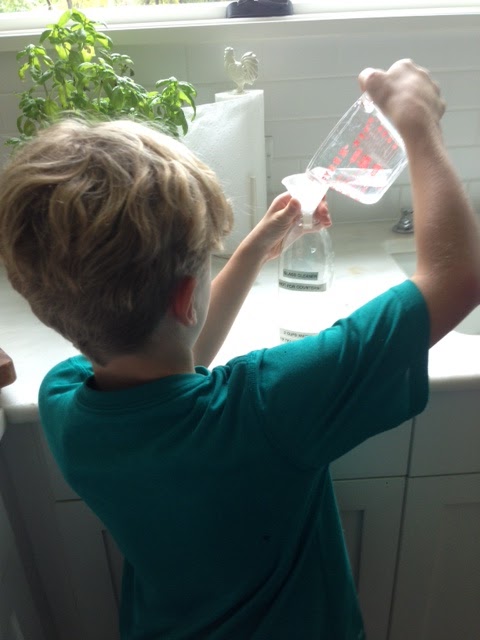
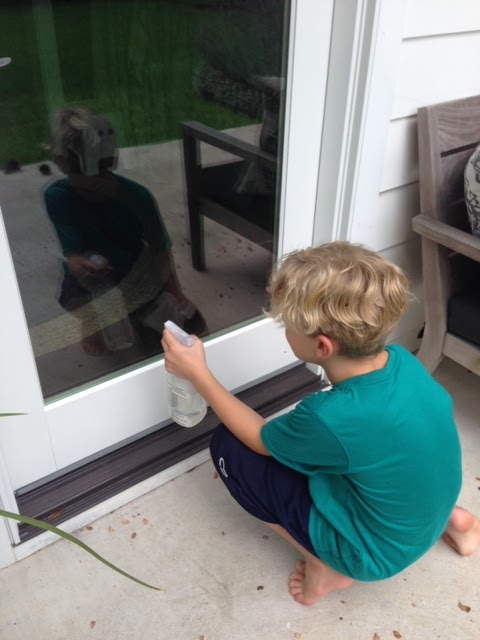
Attachment-1 (1).jpegAttachment-1 (2).jpeg
Below, this student combined purposeful play to create a pulley system using her own body weight to lift her little sister in a homemade chair made from a rope. With supervision, time, and some simple household items, this proud 2nd grader built her own machine! Unbeknownst to her, she was using play to learn about force and motion.
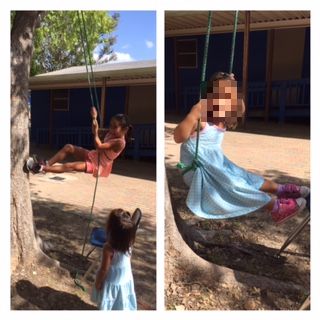
Annie_censored.jpg
The students below used a weekend afternoon to make lemonade. They shopped for the ingredients, read the recipe, measured ingredients, decided on a price, and sold lemonade to neighbors. They made change, and when the day was done, they counted their money. What a great way to learn economics, mixing solids and liquids, counting money, and saving money!
lemonade stand.PNG

To help students and parents, we have created a check out system for math games. We call them our Take Home Math Kits. Most of the games have been recreated from the book Well Played by Linda Dacey, Karen Gartland, Jane Bamford Lynch. To organize a self checkout system, we have a bulletin board, and each child has a clothespin labeled with their name. Each game has a notecard with the game’s name on it, and when a child checks out a game, they place the card in their clothespin. This helps us know who has games checked out. These games generate strategic math discourse.

Just like our students, we are growing our thinking. We know we will continue to refine how we tap into the wealth families offer at home. The beauty of it is time with children doesn’t cost families anything. Something as simple as a dinnertime conversation can enrich children, and when they bring this enrichment to school, it enriches the classroom community. WIN-WIN!

Articles we read:


Thursday, July 21, 2016

Chalk Talk: If We Want Our Voices Heard, We Have to Engage in the Conversation

We are strong proponents of growing readers through interest and choice. Our reading workshop is filled with opportunities for authentic interactions with text.  Unfortunately, we sometimes find ourselves in difficult conversations about the teaching of reading.  We have to speak back against scripted programs, assigned reading, and extrinsic motivators.  We have to defend the amount of picture books and graphic novels we have in our classroom.  It is SO important that we are able to have these conversations in a thoughtful, intelligent manner.  We want to have open dialogue with our colleagues.  We strive to be well-read on the research and prepared to engage in dialogue about our practice.   

If you have not checked out Heinemann’s series “Not This, But That”, we highly recommend you take a look.  (http://www.heinemann.com/series/72.aspx) This is a great series to help us grow our practice and provide some intelligent points when we find ourselves in conversations with colleagues and parents.  I know that when I read No More Independent Reading Without Support it didn’t change my practice in a revolutionary way, but it did help me refine what I was already doing in my classroom.  It also, and possibly more importantly, refined my ability to speak to what I was already doing in my classroom.  I am currently reading No More Reading for Junk and really wishing it had been in my purse during a recent conversation with a colleague and friend.  She was so excited about her campus’ (my former campus) newly adopted points-based reading program.  When she saw the look on my face, she knew how I felt about it.  When I was still at that campus, I spoke out about adopting the program.   I was familiar with some of the research and I knew that the program, while showing results in the short term, hasn’t shown success in growing life-long readers.  Back then I didn’t have an easy way to convey the rationale for keeping the program off of our campus, but as I dig into No More Reading for Junk I find it all laid out for me.  The majority of the book is focused on what we should be doing instead.  This is an essential (and more important) part of our professional conversations.  We need to be proactive if we want to be agents of change.  We can’t just say “that’s bad” and then have nothing to lay out as an alternative.  It is our responsibility to engage in conversation in a way that encourages reflection and an exchange of ideas.  We can’t outright reject other ideas, but instead need to open a dialogue that allows us to share informed opinions.

The two of us have had countless conversations about our obligation as professionals to act as such.  As teachers, we complain that our profession is undervalued and underappreciated.  We must take it upon ourselves to be informed in order to grow our practice and speak intelligently about it.  If we want our voices to be heard, we have to say something important.  In order to do that, we must take the time to do our own research and engage in conversations that push us to think critically.  We also need to step into leadership roles and position ourselves in ways that allow us to listen, speak, and consider the many ideas out there.  We can’t allow others to speak for us.  We have to be the strongest voices because only we can truly speak about our profession from the classroom perspective.  We are doing the hard work, so we should be engaged in the dialogue.

Wednesday, July 20, 2016

ChalkTalk: Teachers Are the Solution, Not the Problem

During the Republican National Convention, Donald Trump Jr. stated that our schools are “like Soviet-era department stores that are run for the benefit of the clerks and not the customers."  Translation: our system favors teachers’ jobs over students’ educations.  Anyone who says that our education system benefits the teachers more than the students has never met an actual public school teacher. We are working in one of the hardest jobs in the world and we are devoted to our students and our profession. We spend our own money (LOTS of it) to stock our classrooms with school supplies and books. We stay late (far beyond our paid hours) to prepare and confer with parents. We work weekends and sacrifice time with our own families in order to take care of the students in our classrooms. We spend our "summer break" reading professional books, catching up on current children's literature, and attending professional development.
We do all of this and are underpaid. If the system really benefitted us more than the kids, I would hope we would be making out like bandits. We are not. I have an advanced degree just like my husband, but unlike my husband, that degree has earned me less than $1,000 more per year than my colleagues without it. On that note, my 15 years of experience mean that I make a few thousand dollars more per year than a novice teacher. The educational system doesn't seem to value my educational experience and expertise.
On top of all of this, there is a general belief that I should reach beyond the classroom in order to "advance" myself. I should want to become an administrator or get my PhD because being "just a teacher" isn't enough. On a regular basis I have to defend why smart, talented teachers should stay in the classroom. We aren't staying because this is such a cushy gig. We lose so many teachers every year because what we do is challenging, and we often do it with little support. We have increasing demands and teachers leave because they can make more money in jobs that are much less stressful. Those of us that stay do so because we love what we do and what we do is important. Public schools open their doors to every single child in our country. As teachers, we care for and educate every single one of them. We do this because it is our career and we are passionate about children and learning. We aren't here for the paycheck. If the job security and salary were the driving force for teachers, we would have a lot of empty classrooms.
I am all for educational reform, but why don’t we talk about paying teachers what they are actually worth instead of blaming them for problems in the system?  Why don’t we talk about elevating the discourse when it comes to the profession of teaching instead of categorizing teachers as greedy or lazy?  Why don’t we talk about ways we can support and develop teachers instead of using them as scapegoats?  Why don’t we recognize teachers who are pouring their hearts and souls into their jobs instead of tearing them down and belittling their commitment?  Why don’t we have a real conversation about public education and invite the stakeholders who have shown the greatest commitment to the issue, the teachers?

Tuesday, April 12, 2016

Chalk Talk: Reading Widely to Grow Your Teaching. Reading Widely to Grow Your Readers and Writers


Teri Lesesne’s livejournal is thought provoking. Maybe you know her as “Professor Nana”. It is the type of blog that inspires teachers to reconsider their practices as a way to revise and reform what we do in the classroom. I love Professor Nana's blog. Her posts are thought provoking. Her post on April 3rd reminds teachers of the importance of academic and professional reading. It helps us stay current and remain a part of the conversation with those trying to challenge what we believe is right for children. We both believe wholeheartedly in seeking out professional reading, self-selected articles, books, and other pieces of professional texts throughout the year to both affirm our practices and push us to be agents of change inside our classroom.


Following this read, we both reflected about the professional reading we do each day, weekly, monthly, and yearly. We push each other to read widely, and we also revisit texts each year. How could we start a new school year without rereading Donalyn Miller’s books,  The Book Whisperer or Reading in the Wild?


This morning, we connected the need to stay current with professional reading to the need for teachers of reading and writing to continue along this vein by reading children’s literature- both new and old. If we are not reading the new gems in children’s literature, how are we to be effective in reading and writing conferences? How can we find new books to use as mentor texts? How can we engage our children in book talk or make meaningful, authentic book recommendations? Reading the very books our students need and want helps us to find books that will act as “mirrors and windows”. (If you haven’t seen Grace Lin’s Ted Talk, “The Windows and Mirrors of Your Child’s Bookshelf”, you should!)

So, here’s to a year of reading texts that will help us grow our practice. And here’s to a year of reading texts to help us grow our readers and writers too!