Pages

Monday, January 23, 2017

Chalk Talk: Homework Shift to "Home-School Connection"

Have you been reading all of the research about homework? Are you thinking about taking the plunge and making changes to your homework program? Maybe you have children of your own, and you are noticing how homework is affecting family time or your child’s confidence. Or maybe you feel like conceptual learning is being outsourced for you to teach your child. Whatever the case may be, it is hard to hide from all of the research being posted to social media and inspiring blog posts all over the internet about homework.
After much reading of research on the effects of homework on young children, we decided to revamp our thinking about the traditional homework we have sent home for years now. In recent years, we used a homework log where children recorded the books they read, how long they read (at least 30 minutes daily), how they studied spelling, and how they studied math facts. We found that children weren’t always honest about their recordings. Perhaps it was because the homework log was not a meaningful exercise. It is also very possible that the homework log discouraged children from being authentic learners. Parents communicated they were setting timers to ensure their children read for at least 30 minutes.
As we reflected, we decided the homework log wasn’t an effective measure of accountability. Most importantly, the log didn’t encourage a love of learning. We wanted to send the message to parents that we truly wanted to partner with them to encourage children to learn through play, meaningful family time, and the natural curiosity children have if we give them time.
Our chalk talk to/with you is all about how we are trying to make it happen in our 2nd grade classroom. We hope you will be able to use this post as you rethink homework, create meaningful ways for your children to share their learning lives with one another (and with you!), and create an authentic way to embed accountability.

We have 66 families who have participated in our new program, and only 4  parents expressed the desire to have worksheets sent home (and we were able to redirect their requests by sending home one of our take home math kits). With any shift in thinking, there will always be some who voice concern- colleagues and parents. The request for worksheets was motivated by efficiency. They wanted a homework model that didn’t require time of them. These parents needed some support and ideas to help them understand we were not asking them to do more.   By and large, the feedback has been overwhelmingly positive. It all started with the following letter:

Dear Parents,
As we will be working closely as partners ensuring your child makes great home/school connections. We value you as your child’s first teachers and know you have wonderful, enriching conversations at home as a family. We also value the time and activities you plan beyond the school days and on weekends. We are not asking you to do more. We are hoping to capitalize on the wonderful experiences you already have with your child every day- with math, reading, science, and social studies. Our hope is to encourage a love of learning, curiosity, and social justice. So much of this can happen right at your dinner table, and through sharing our experiences from home. The only traditional homework will be unfinished classwork, and it will travel in a homework folder. This work will almost always be due the following day.
Next week, your child will have a menu to choose from each day (Tuesday-Thursday). Each day, they will share something they learned about either math, science, social studies, or reading. They will share something they learned at home about math by adding to a class padlet on the computer. They will create a “Did You Know” science fact, which will be used on a “Did You Know” Board inside our classroom (These facts will rotate until all of our facts have been shared). Each child will recommend a book they enjoyed at home on a recommendation display. For Social Studies, each child will create a picture with labels detailing their understanding about something they learned about history, notable people, geography, government, or economics.  Every week the students will choose from menu items representing different subject areas.
The children thought of creative ways to do this. Here are some of their ideas:
  • Read, read, read, and read some more- for the fun of it!
  • Counting allowance- They said this is math, but when you start talking about who is on the coins and their significance, it adds social studies!
  • Looking at a Map- This is about geography, and there are a lot of great tools on a map- compass rose, map keys, and coordinates (which adds math!)
  • Reading Nonfiction- This could be a blend of reading and science/social studies/or even math!
  • Going out to eat! This creates an opportunity to read a menu, compare prices of items, or use a phone calculator to help add up the family’s orders!
  • Visiting our 2nd grade website for some purposeful technology:http://casis2nds.weebly.com/
  • Cooking! They were quick to point out that cooking blends science, math, and reading! We read Cook-A-Doodle-Doo. Attached is a picture of the recipe from the book.
We would love to have some pictures of your child growing their thinking about reading, science, math, and social studies at home!
Thanks,
Stacey and Brennan


**Here is one of the menus the children get at the beginning of the week. They choose 3 of the 4 activities during the week.


We have only experienced a couple of months of our “Home-School Connection", and we have been busy saving student samples, parent reflections, and the pictures parents are sending of their children learning at home. Next year, we will be armed with so many visuals and testimonies from children and parents, which will be a great help as we orient our new families.   This year we have seen so much enthusiasm from the students about their work at home and the conversations at school are inspiring other students to create, talk, and explore at home. Here are some pictures of our children learning at home.


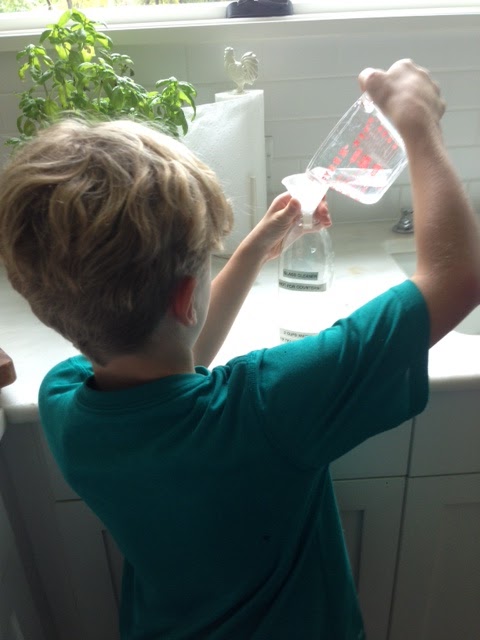
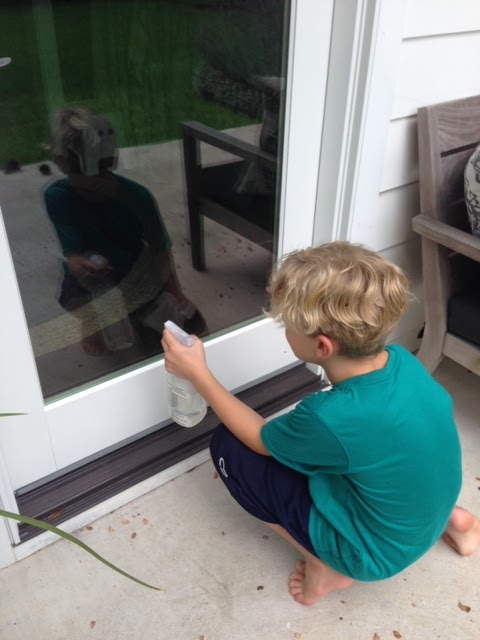
This student was given the time and his parents’ trust to mix the ingredients for an organic glass cleaner. He was able to read the recipe, use fractions to measure the ingredients, and experience chemistry in a meaningful way as he built a sense of autonomy helping his family.
Attachment-1 (1).jpegAttachment-1 (2).jpeg
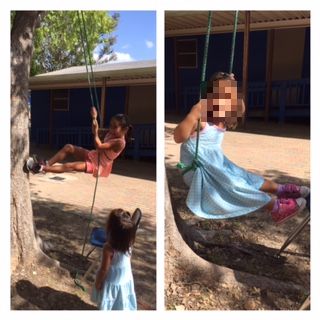
Below, this student combined purposeful play to create a pulley system using her own body weight to lift her little sister in a homemade chair made from a rope. With supervision, time, and some simple household items, this proud 2nd grader built her own machine! Unbeknownst to her, she was using play to learn about force and motion.
Annie_censored.jpg
The students below used a weekend afternoon to make lemonade. They shopped for the ingredients, read the recipe, measured ingredients, decided on a price, and sold lemonade to neighbors. They made change, and when the day was done, they counted their money. What a great way to learn economics, mixing solids and liquids, counting money, and saving money!
lemonade stand.PNG

To help students and parents, we have created a check out system for math games. We call them our Take Home Math Kits. Most of the games have been recreated from the book Well Played by Linda Dacey, Karen Gartland, Jane Bamford Lynch. To organize a self checkout system, we have a bulletin board, and each child has a clothespin labeled with their name. Each game has a notecard with the game’s name on it, and when a child checks out a game, they place the card in their clothespin. This helps us know who has games checked out. These games generate strategic math discourse.

Just like our students, we are growing our thinking. We know we will continue to refine how we tap into the wealth families offer at home. The beauty of it is time with children doesn’t cost families anything. Something as simple as a dinnertime conversation can enrich children, and when they bring this enrichment to school, it enriches the classroom community. WIN-WIN!

Articles we read:


Sunday, November 13, 2016

Wrapping Our Children in Picturebook Love


credit: Jarrett Krosoczka @studiojjk
The #hugsfromkidlit movement on social media has gained serious traction over the past couple of days.  Whether we are teachers, librarians, parents, or book creators, we all want to create a safe space for our children.  One way we do that is with the books we feature and share with our students.  We recently contributed to a post on Book People’s blog about building a thoughtful library.  You can see the full post here: https://bookpeopleblog.wordpress.com/2016/09/07/modern-first-library-starting-the-conversation-with-aisd-educators/  In the post we discussed how a book can be a spark for deeper thinking and open up conversations about a wide range of topics.  The books we choose for our collections are opportunities. Opportunities for children to learn how to share and spread kindness.  Opportunities for children to see others that are the same, and different from them.  Opportunities to learn how to help others who might be feeling lonely or scared.  By opening the door to these conversations, children have a safe space to discuss situations that might seem difficult or scary, and figure out what they can do to help others.  When we share diverse books with children, they see themselves, and others, in important positions.

credit: Lauren Castillo @studiocastillo
Librarians can be a great resource when teaching children about diversity, tolerance, and empathy.  They can help parents and teachers gather books and resources that will teach and empower their children to be better friends and citizens.  By teaching our children about tolerance and empathy, children will feel more empowered when they see someone being mistreated.  In order to begin this empowerment, school and public library collections, as well as personal library collections need to be diverse.  At the end of this post, you will find a digital advocacy story that was created for librarians, teachers, and parents to explain the need for a diverse library.

We have collected a few books we believe are important to share with our kids.  Many have been included both for how they embrace diversity as well as how they build empathy and empower children.  Some of them were chosen simply because they are about spreading love in the world. We recognize that this list is by no means complete.  We encourage you to use the comments section on this blog post to continue the list.  Help us fill our libraries with rich and meaningful books.

Reading books about sensitive topics requires us to tune into our own perspectives and biases.  If we feel uncomfortable to approach these books and conversations, we must seek our own truths. Courage to have an authentic moment before, during, and after reading “door opening” books can have transformative effects for individual children and the classroom community as a whole.


Book List:


Author and Illustrator: Salina Yoon
Treat others how you think they would want to be treated

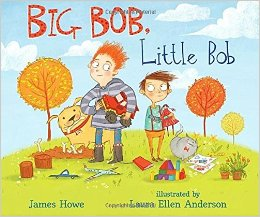
Author: James Howe
Illustrator: Laura Ellen Anderson
Finding connections despite differences and standing up for one another.

Author: Laurie Ann Thompson
Illustrator:  Sean Qualls
A true story of adversity and perseverance

Author: Kevin Diller
Illustrator:  Justin Lowe
Octicorn is a little bit different, but he just wants to be included.

Author: Vera B. Williams
Illustrator: Chris Raschka
A child finds safety in this story of adoption.

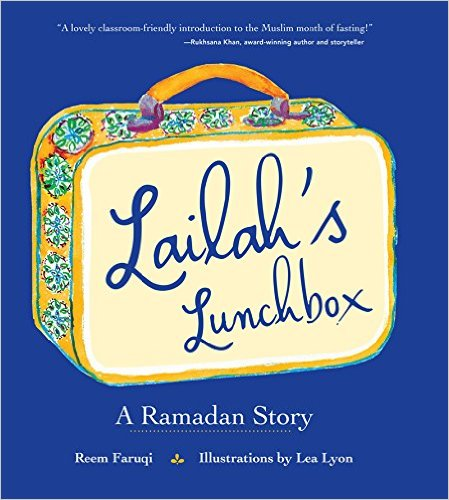
Author: Reem Faruqi
Illustrator: Lea Lyon
A story of Ramadan, courage, and acceptance

Author: Matt de la Pena
Illustrator: Christian Robinson
Giving back to community, Being Thankful for what you have

Authors: F. Isabel Campoy and Theresa Howell
Illustrator: Rafael Lopez
Even small children can have a big impact on a community

Author: Jim Averbeck
Illustrator: Yasmeen Ismail
Creativity, perseverance, and adaptability make Sophia a strong character.

Author: Jeri Watts
Illustrator: Hyewon Yum
An immigration story about holding on to tradition in a new home

Author: JonArno Lawson
Illustrator: Sydney Smith
Small gestures of kindness are transformative

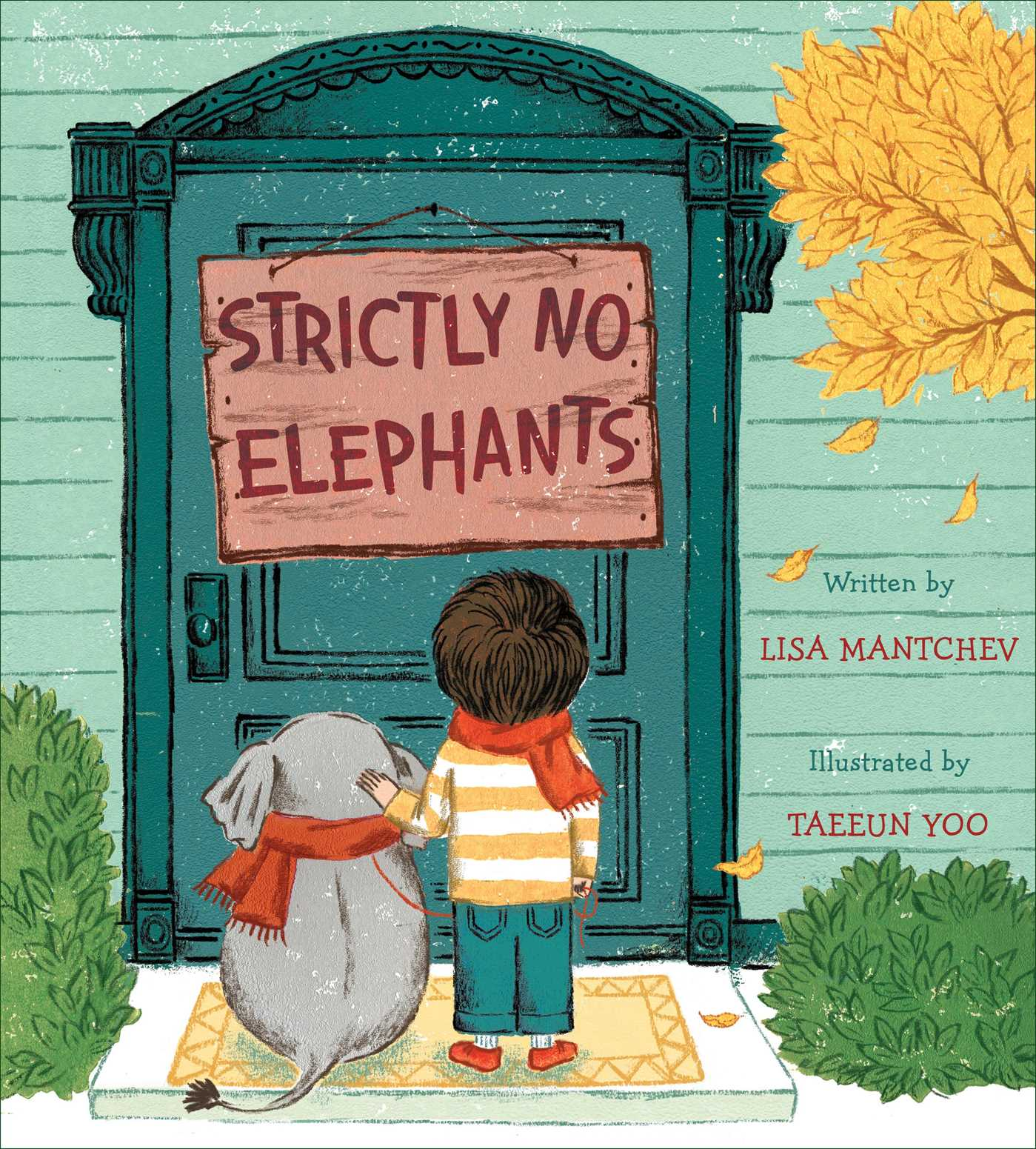
Author: Lisa Mantchev
Illustrator: Taeeun Yoo
Kindness and inclusion are at the heart of this story.

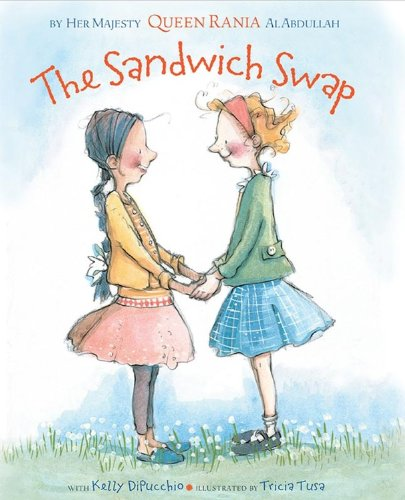
Authors: Queen Rania of Jordan Al Abdullah and Kelly DiPucchio
Illustrator: Tricia Tusa
A tale of friendship and learning tolerance and understanding

Author:Jairo Buitrago
Illustrator: Rafael Yockteng
An immigration journey through the eyes of a child

Author: J.J. Austrian
Illustrator: Mike Curato
Love is love.

Here are some helpful links to aid you in building diverse libraries: 
http://booksthathealkids.blogspot.com/  (look at the links on the right side)
http://weneeddiversebooks.org/where-to-find-diverse-books/ (multiple links to different resources and award lists)
http://www.ncte.org/awards/charlotte-huck NCTE's Charlotte Huck Book Award


Courtney made this digital presentation about the importance of building libraries with diverse texts.


Courtney Ewing worked with us on this blog post. She is a 2nd grade teacher at Casis Elementary. She has taught for 10 years and is currently getting her masters at Texas Women’s University in Library and Information Sciences.

Friday, November 11, 2016

Cricket Song


Anne Hunter’s watercolor and ink illustrations of Cricket Song softly portray two different continents and the ocean connecting them. Through story and pictures, Hunter reminds readers of the interconnected magic between people, animals, and Earth. Commonly, young children, by nature, are egocentric, and Cricket Song gently portrays the world as bigger than our home, yard, and gently encourages us to imagine beyond what we can even see.

The story begins with a child being lulled to sleep by the song of crickets, whose song blends with the “kreck kreck kreck” frogs and the calls of the poorwill. This interconnectedness continues by way of smell and sound through one continent, over and ocean, and into the sleeping room of a child far away on another continent. Hunter gifts the reader with an additional panel of illustration on the bottom of each page aimed to reveal the bigger picture giving a “zoom in” “zoom out” effect. Each page turn begs for conversation and noticings much like a “seek and find” favorite.

Cricket Song is sure to appeal to animal lovers. Curious children will want to learn more about the animals Hunter carefully places on each page. The story is a reminder to young writers to use their senses as they write to help their reader create strong mental images vivid settings. Hunter’s illustrations add a layer of story creating synergy between text and picture. This is the kind of book children can use when they are looking to add pictures that can enhance their writing. The use of onomatopoeia for the songs of many animals is made clear to the reader with italicised text.  Themes of cultural diversity and interconnectedness offer a multitude of opportunities for talk.

Mentor Text Ideas: Illustrations, onomatopoeia, Using Senses for Visualization


Sunday, November 6, 2016

Nerdy Birdy


Nerdy Birdy, written by Aaron Reynolds and illustrated by Matt Davies, was the first book we read in our classroom this year.  The theme of inclusion is an essential element for building a classroom community.  In the story, the main character, Nerdy Birdy, doesn’t fit in with the “cool” birdies.  While they are busy hunting, eating worms, and posing, Nerdy Birdy is busy reading and playing “World of Wormcraft”.  Nerdy Birdy is lonely and the cool birdies make him feel like an outsider.  That is, until he meets the other nerdy birdies,  They invite him to join because “there’s always room for another nerdy birdy”.  Then, Vulture moves in.  Nerdy Birdy invites him to hang out with the other nerdy birdies, but they quickly start questioning whether Vulture belongs with them.  Nerdy Birdy faces a dilemma: stay with his new-found friends or befriend Vulture?  Remembering how it feels to be alone, Nerdy Birdy chooses a friendship with Vulture.  Even though they do not have everything in common, they find common ground in their friendship.  And they always have room for another birdy.

This book fits perfectly into any Social Emotional Learning curriculum.  It celebrates individuality and promotes an inclusive community.  Nerdy Birdy also models how to be an “upstander” by standing up for what is right, even if it means being alone.  We plan to loop back to this story at the end of the year with a reread and our very own "Nerdy Birdy" class picture, where each child comes to school dressed to show their true colors and interests. It is sure to be a great send off and a sweet memento aimed to remind them to embrace everyone and be true to themselves.

Nerdy Birdy also has multiple opportunities to re-visit as a mentor text for the writers in your classroom.  The use of dialogue in the book is a good transition from speech bubbles into traditional use of quotation marks.  We like to use graphic novels and comics to help the students see what belongs inside of the quotation marks.  In Nerdy Birdy, the dialogue is written inside quotation marks, but is right next to the character similar to a speech bubble.  There is also an opportunity to look at how to use non-fiction text features in fiction storytelling.  The book has multiple diagrams, lists, and labels used to convey information about the characters.  It’s a great example of how authors and illustrators play with the elements of fiction and non-fiction and an excellent invitation to growing writers to blend elements in their own writing and illustrating.  

Mentor Text Ideas: dialogue, text features, SEL

Thursday, July 21, 2016

Chalk Talk: If We Want Our Voices Heard, We Have to Engage in the Conversation

We are strong proponents of growing readers through interest and choice. Our reading workshop is filled with opportunities for authentic interactions with text.  Unfortunately, we sometimes find ourselves in difficult conversations about the teaching of reading.  We have to speak back against scripted programs, assigned reading, and extrinsic motivators.  We have to defend the amount of picture books and graphic novels we have in our classroom.  It is SO important that we are able to have these conversations in a thoughtful, intelligent manner.  We want to have open dialogue with our colleagues.  We strive to be well-read on the research and prepared to engage in dialogue about our practice.   

If you have not checked out Heinemann’s series “Not This, But That”, we highly recommend you take a look.  (http://www.heinemann.com/series/72.aspx) This is a great series to help us grow our practice and provide some intelligent points when we find ourselves in conversations with colleagues and parents.  I know that when I read No More Independent Reading Without Support it didn’t change my practice in a revolutionary way, but it did help me refine what I was already doing in my classroom.  It also, and possibly more importantly, refined my ability to speak to what I was already doing in my classroom.  I am currently reading No More Reading for Junk and really wishing it had been in my purse during a recent conversation with a colleague and friend.  She was so excited about her campus’ (my former campus) newly adopted points-based reading program.  When she saw the look on my face, she knew how I felt about it.  When I was still at that campus, I spoke out about adopting the program.   I was familiar with some of the research and I knew that the program, while showing results in the short term, hasn’t shown success in growing life-long readers.  Back then I didn’t have an easy way to convey the rationale for keeping the program off of our campus, but as I dig into No More Reading for Junk I find it all laid out for me.  The majority of the book is focused on what we should be doing instead.  This is an essential (and more important) part of our professional conversations.  We need to be proactive if we want to be agents of change.  We can’t just say “that’s bad” and then have nothing to lay out as an alternative.  It is our responsibility to engage in conversation in a way that encourages reflection and an exchange of ideas.  We can’t outright reject other ideas, but instead need to open a dialogue that allows us to share informed opinions.

The two of us have had countless conversations about our obligation as professionals to act as such.  As teachers, we complain that our profession is undervalued and underappreciated.  We must take it upon ourselves to be informed in order to grow our practice and speak intelligently about it.  If we want our voices to be heard, we have to say something important.  In order to do that, we must take the time to do our own research and engage in conversations that push us to think critically.  We also need to step into leadership roles and position ourselves in ways that allow us to listen, speak, and consider the many ideas out there.  We can’t allow others to speak for us.  We have to be the strongest voices because only we can truly speak about our profession from the classroom perspective.  We are doing the hard work, so we should be engaged in the dialogue.

Wednesday, July 20, 2016

ChalkTalk: Teachers Are the Solution, Not the Problem

During the Republican National Convention, Donald Trump Jr. stated that our schools are “like Soviet-era department stores that are run for the benefit of the clerks and not the customers."  Translation: our system favors teachers’ jobs over students’ educations.  Anyone who says that our education system benefits the teachers more than the students has never met an actual public school teacher. We are working in one of the hardest jobs in the world and we are devoted to our students and our profession. We spend our own money (LOTS of it) to stock our classrooms with school supplies and books. We stay late (far beyond our paid hours) to prepare and confer with parents. We work weekends and sacrifice time with our own families in order to take care of the students in our classrooms. We spend our "summer break" reading professional books, catching up on current children's literature, and attending professional development.
We do all of this and are underpaid. If the system really benefitted us more than the kids, I would hope we would be making out like bandits. We are not. I have an advanced degree just like my husband, but unlike my husband, that degree has earned me less than $1,000 more per year than my colleagues without it. On that note, my 15 years of experience mean that I make a few thousand dollars more per year than a novice teacher. The educational system doesn't seem to value my educational experience and expertise.
On top of all of this, there is a general belief that I should reach beyond the classroom in order to "advance" myself. I should want to become an administrator or get my PhD because being "just a teacher" isn't enough. On a regular basis I have to defend why smart, talented teachers should stay in the classroom. We aren't staying because this is such a cushy gig. We lose so many teachers every year because what we do is challenging, and we often do it with little support. We have increasing demands and teachers leave because they can make more money in jobs that are much less stressful. Those of us that stay do so because we love what we do and what we do is important. Public schools open their doors to every single child in our country. As teachers, we care for and educate every single one of them. We do this because it is our career and we are passionate about children and learning. We aren't here for the paycheck. If the job security and salary were the driving force for teachers, we would have a lot of empty classrooms.
I am all for educational reform, but why don’t we talk about paying teachers what they are actually worth instead of blaming them for problems in the system?  Why don’t we talk about elevating the discourse when it comes to the profession of teaching instead of categorizing teachers as greedy or lazy?  Why don’t we talk about ways we can support and develop teachers instead of using them as scapegoats?  Why don’t we recognize teachers who are pouring their hearts and souls into their jobs instead of tearing them down and belittling their commitment?  Why don’t we have a real conversation about public education and invite the stakeholders who have shown the greatest commitment to the issue, the teachers?

Wednesday, July 13, 2016

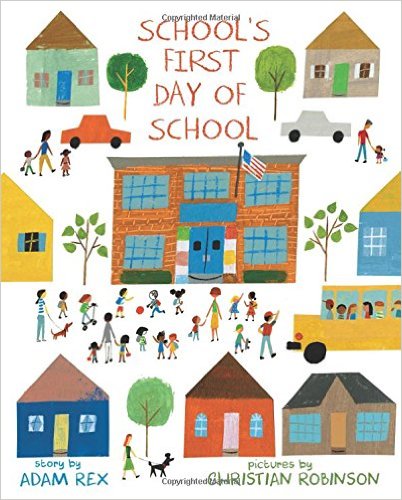
School's First Day of School

5140WLWHiLL._SX400_BO1,204,203,200_.jpg
School’s First Day of School, by Adam Rex is a great way to start the year! First of all, we should begin with how much we love Adam Rex! He is an interesting, clever, and funny guy, and we use many of the books he writes and illustrates as mentor texts inside our reading and writing workshops.  His website is full of information sure to entertain you on its own! In School’s First Day of School, he partners with illustrator Christian Robinson, whose most recently illustrated Last Stop on Market Street, which received a Caldecott Honor. Robinson’s simplistic illustrations provide an accessible style for children to replicate. His books are great mentor texts in the classroom to use when illustrating their own books!

School’s First Day of School tells the story from the perspective of a brand new school brought to life with illustrations personifying the front of the school. Robinson’s thoughtful subtlety allows readers to make these discovery of the School's face on their own, which we know children love to do! The story will connect to any child (or teacher!) who experiences anxiety a new school year often creates, which makes for a great SEL lesson!  Robinson’s acrylic and collage illustrations reflect a beautifully diverse student body and follows a small freckled girl as she conquers her anxiety before the last pages turn. Rex creates a story with a very real plot for children, and he does it with perfectly placed jokes to give readers something to consider and a reason to laugh!  Perhaps the most heartwarming relationship is between School and Janitor. Janitor plays a nurturing role as he calms School’s anxiety before school starts. He is the expert in all things “school”, and he lovingly takes care of School to make it a special place for the children and teachers- Just like Ms. Norma and Ms. Nicolasa (a special shout out to our special friends who take such great care of our classrooms!)

Rex creates a story full of School’s internal dialogue, which is something we encourage our young writers to use in their stories. Internal dialogue mirrors real life, which creates voice and authenticity. Using internal dialogue is an effective way to elaborate, and it gives readers details they can’t acquire any other way. The collaborative work between author and illustrator make this book a great tool to use with children who want to try on personification and perspective as they write.
-- A must have for the beginning of the year!

Mentor Text Ideas: internal dialogue, perspective, personification,